
Timber Preservation: Why Treatment, Use Class and Service Life Really Matter
Friday, February 06, 2026
When softwood timbers are to be used for outdoor applications such as decking, cladding and landscaping, durability is not optional – it is fundamental. The long-term performance and safety of timber outdoors depends heavily on the correct preservative treatment, matched precisely to how and where the timber will be used.
Understanding how timber is preserved, what application Use Class it is treated for and what service life is expected, can make the difference between a structure that performs safely for decades and one that succumbs to decay and fails after a few years.
How Timber Preservation Works
The natural durability(resistance to fungal decay) of most softwood species is low but it can be significantly enhanced by pretreatment with a wood preservative applied by an industrial process. This is not a dip or surface coating, but a controlled, factory-based impregnation process designed to protect timber products from fungal decay and insects.
The process begins by kiln or air-drying timber products in their finished dimensions, which reduces the timber’s moisture content to allow preservatives to penetrate effectively. The timber products are then loaded into a high-pressure treatment plant (autoclave), where preservative is impregnated into the cells of the timber using a combination of vacuum and pressure.
Most decking, cladding and landscaping products available through reputable trade suppliers have already been pressure treated in this way - but it’s a mistake to assume all treated timber is the same. Protection levels vary depending on the treatment specification and intended end use, making it essential to confirm that the timber is fit for purpose before using it.
The Use Class System Explained
Preservative treatment requirements are governed by the Use Class system, defined in British and European Standard BS EN 335. This system categorises timber applications according to the level of exposure to moisture and biological attack a product will face during service.
Use Class 3 uncoated (u) and coated (c) – Above Ground External Use
Use Class 3 applies to timber that is not in contact with the ground but is exposed to frequent wetting.
Typical applications include:
- Deck boards
- Deck balustrades and handrails
- Cladding boards
- Cladding battens
Use Class 4 – Ground Contact or outdoor structural applications
Use Class 4 is required for timber that is in direct contact or in close proximity to the ground and for safety critical structural components.
Common applications include:
- Deck and fence posts
- Deck beams and joists
- Ground-contact landscaping timbers
TDCA guidance goes further:
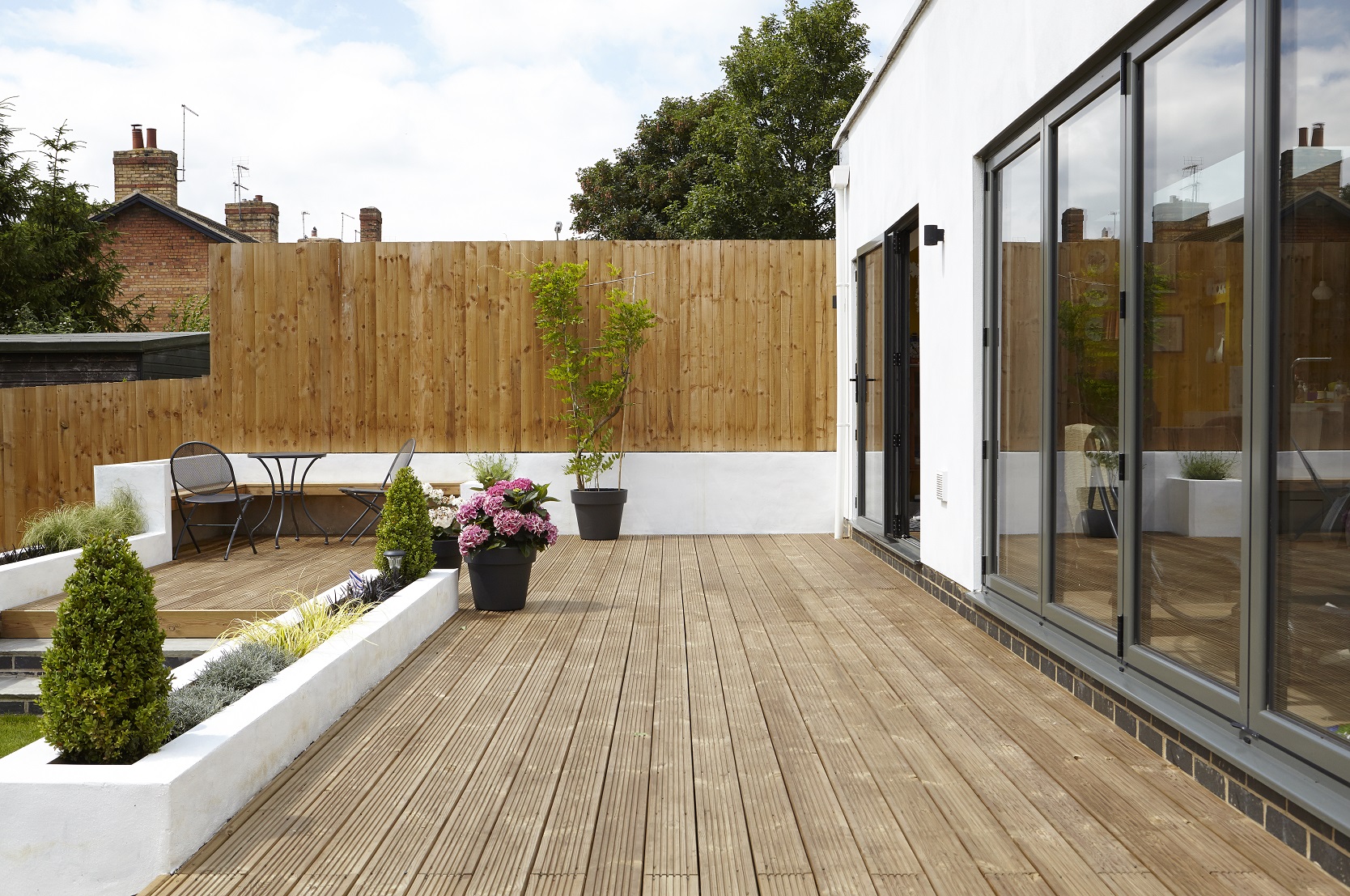
The Timber Decking & Cladding Association strongly recommends that all exterior softwood decking substructure components, including joists and beams, are pressure treated to Use Class 4 regardless of whether they are in direct ground contact.
This is to ensure the enhanced durability and safety of deck substructures is in line with British Standard BS 8417 Preservation of Wood: Code of Practice and The Wood Protection Association (WPA) Code of Practice for Industrial Wood Preservation.
The WPA (Wood Protection Association) is the UK authority on wood protection. It’s website is packed with information about extending the life of wood and protecting it against rot, insects and fire.
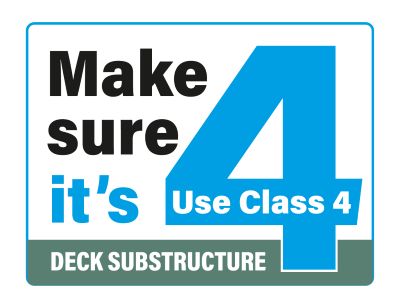
This all forms the basis of the ‘Make sure it’s 4’ campaign promoted by the WPA - ensuring structural elements receive enhanced protection for long-term durability and safety.
Why Service Life Matters
Preservative pretreatment is also linked to desired service life. Industry-standard service life specifications for outdoor applications are typically 15 or 30 years, with 15 years typically the default unless stated otherwise.
The TDCA and WPA strongly advise specifiers, installers and buyers to:
- Ask suppliers to confirm the Use Class in writing
- Request the service life specification applicable to the product supplied
Clear documentation protects everyone in the supply chain and ensures compliance with best practice and relevant standards.
Look for Independent Assurance
When purchasing timber components, always look for third-party quality assurance accreditations such as the TDCA DeckMark or CladMark schemes. These marks demonstrate that products and suppliers have been independently assessed by the TDCA, giving confidence that they have been produced under strict quality control procedures designed to produce pre-treated timber products in line with TDCA and British Standards. Unfortunately, there is a lot of non-compliant treated timber or timber which is not accurately described being offered for sale in the UK - make sure you always choose timber that’s been correctly treated for where you want to use it.
In Summary
Timber preservation is about more than just the colour of the treated component - it’s about choosing the right Use Class, verifying service life, and ensuring independent quality assurance.
For decking and cladding projects that are built to last:
- Match the Use Class treatment specification to the end use
- Make sure it’s UC4 for structural elements and ground contact applications
- Ask suppliers for written confirmation, read more here
Get the specification right from the outset, and preservative-pretreated timber will deliver durability, sustainability, and long-term performance.