Publications
The Timber Cladding Handbook


Barrettine On-Site Wood Care
Special report: Cladding protection case study
2020 saw the popularity of garden rooms explode, with no signs of the trend slowing down. Indeed, with younger generations having a harder time flying the nest, and working from home still being the new status quo for a lot of office jobs, there’s a real need amongst homeowners to maximise their living space.
As well as the trend of garden rooms growing, the materials we use seem to be steering a certain way too. Whilst fibre cement offers a more modern alternative, using traditional timber is becoming more in vogue again. Fashion, art, media, and all the rest, always ends up being pretty cyclical (just look how much flares have come back into fashion!). As such, it’s no surprise that traditional building materials are coming back to the fore. There’s a timeless aesthetic to using timber and for the eco-conscious, well, fibre cement doesn’t exactly grow on trees!
For those that are going down the timber route, be it to clad a garden room, clad the facade of a building or to build a car port, you ‘wood’ be wise to stay on top of protecting your cladding material. After all, you’ve invested a lot of capital into it, and there’s no use just chucking it down the drain.
The garden room
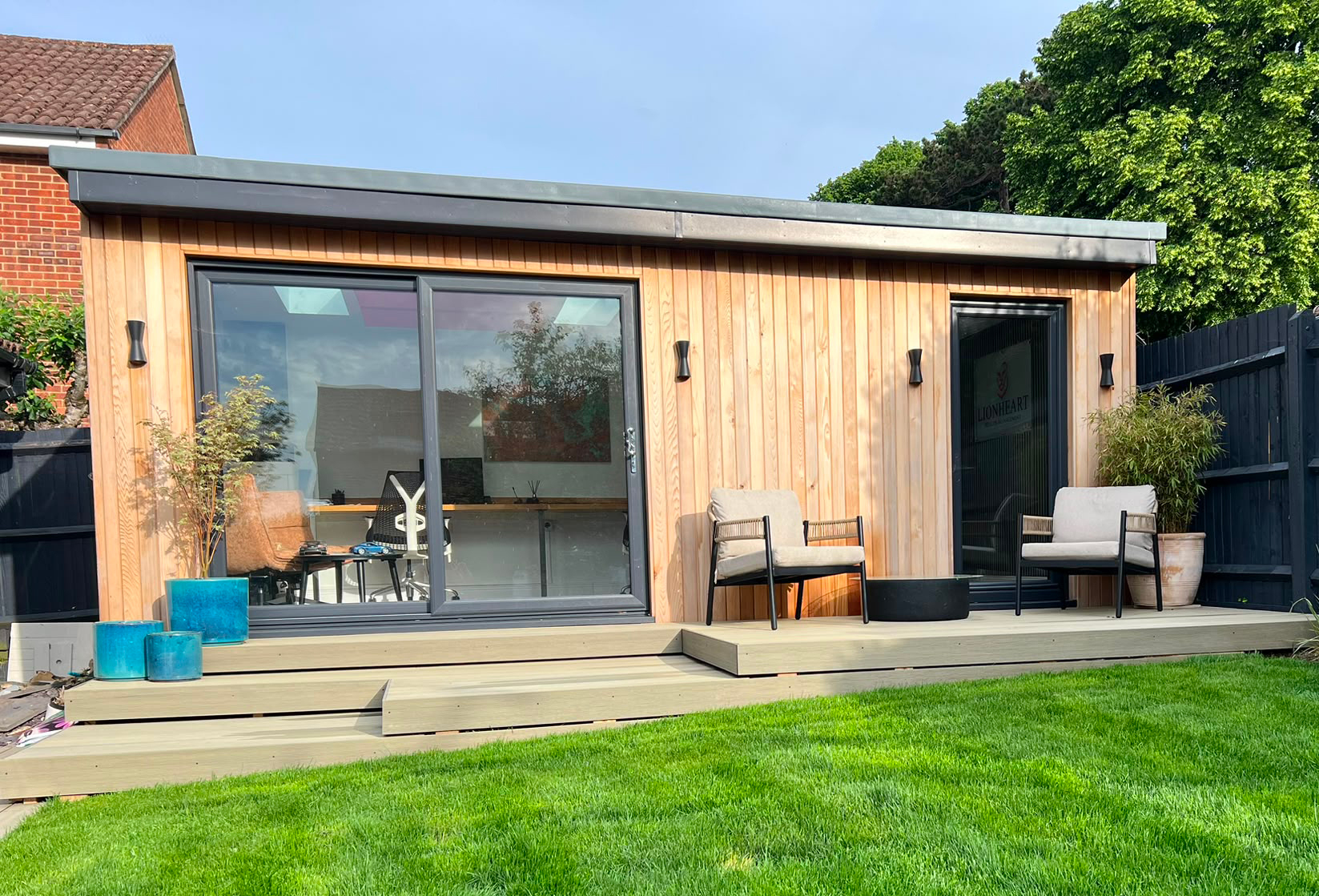
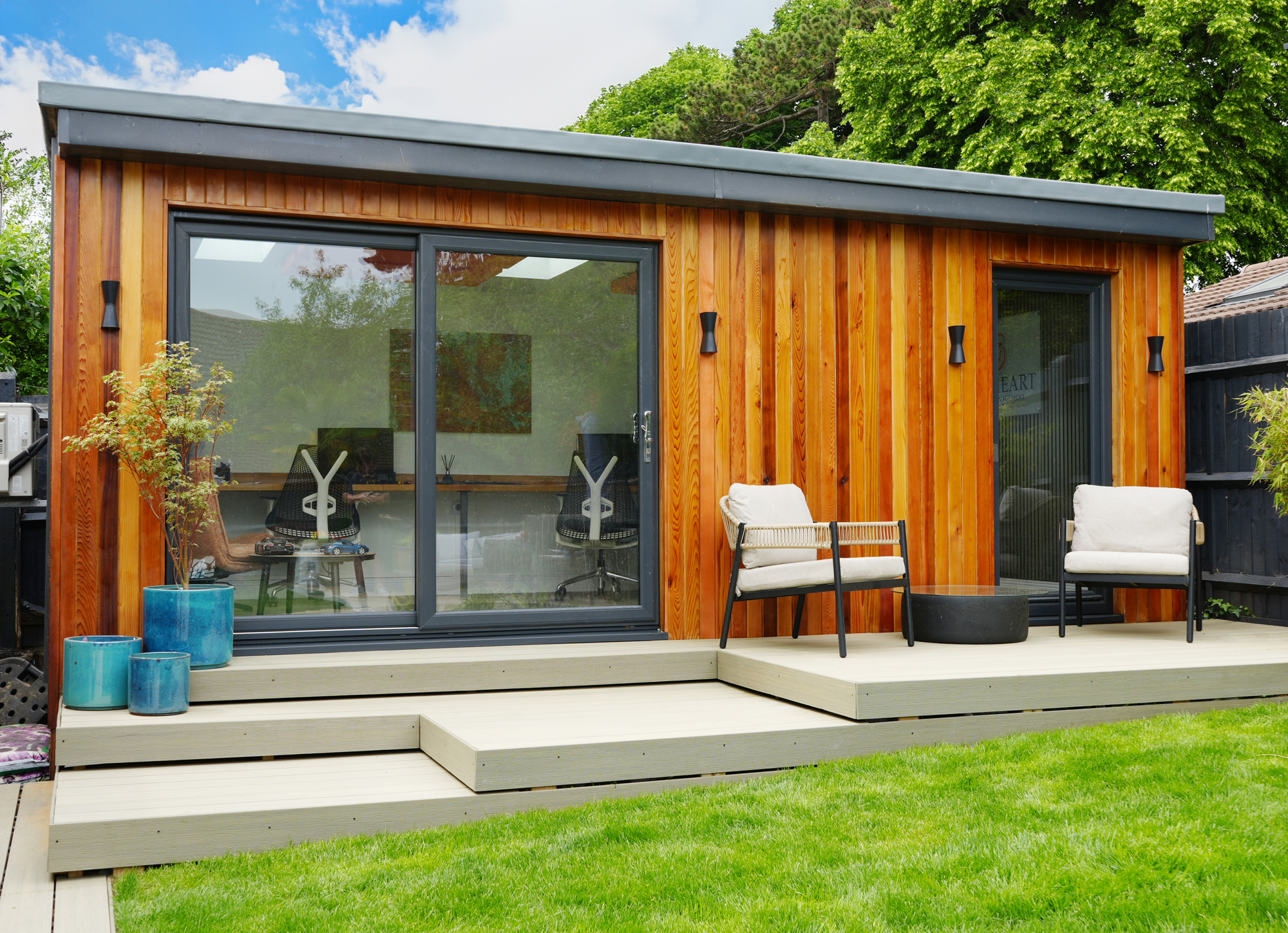
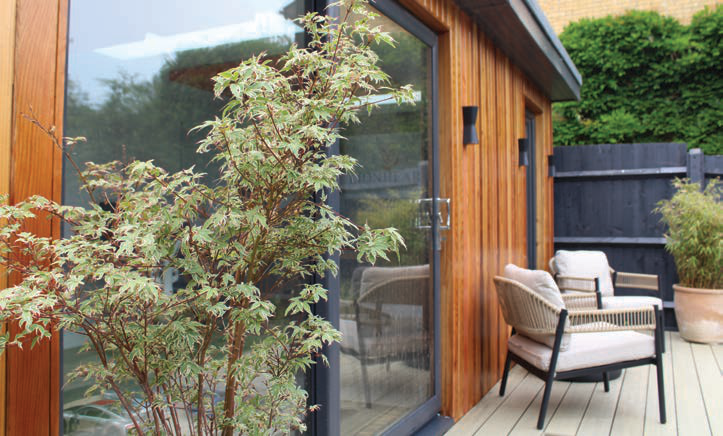
This is where cladding oil can come into play. Take Southampton-based James’ garden room/home office as an example. James built this himself with a friend from a metal frame kit that he ordered online (an experience he likened to Meccano) which he then clad in a gorgeous cedar.
A few years on, and the cladding was beginning to show signs of age. Whilst James has tried to make a habit of oiling it every few years, he’s never been impressed with the oil he’s chosen from an application or protection perspective. He was looking for something new that could keep his garden room looking good as new. James had recently had his whole garden renovated and so there seemed no better time to reinvigorate his place of work (and garden centre piece!).
Sands good
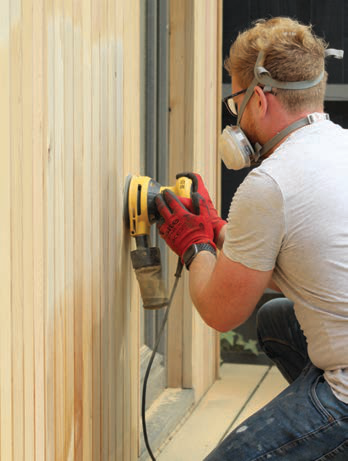
The first step in doing this was to sand the cedar cladding back down to the original substrate. For this, James went at the old coating with a orbital sander.
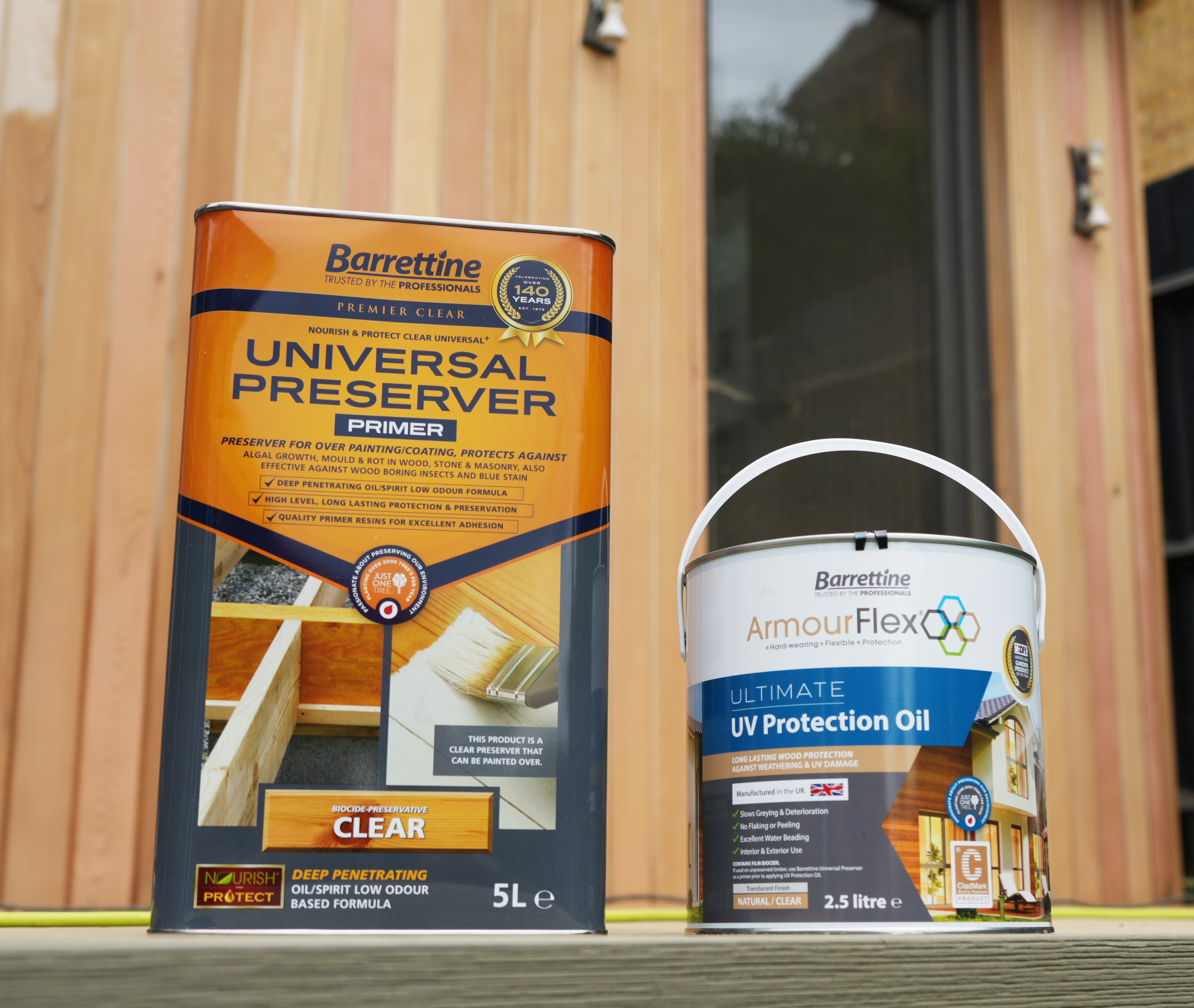
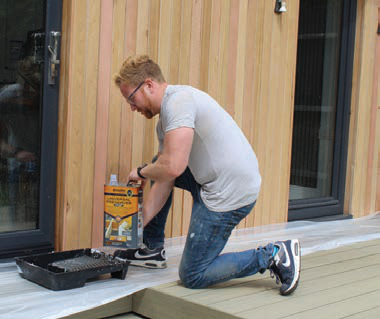
Thankfully, the wood hadn’t begun to silver yet, so there was no need to apply any wood reviver. Instead, James moved straight on to priming the cedar surface. For this, he used Barrettine’s Clear Universal Wood Preserver. This is instrumental in protecting the wood against rot, insects and fungi. It penetrates the surface, keeping the wood durable and defends it against the elements. Because it’s wax-free, the Wood Preserver is incredibly easy to apply on liberally and James had an easy time of coating the cedar cladding. It’s easy and straightforward to use, ready to go from the tin and is colourless and low odour. In this instance it’s working as a base layer for the next treatment to be added.
The Universal Wood Preserver can be used internally or externally (as long as the timber is out of ground) and is suitable for use on all types of timber, rough, sawn or smooth.
It is also harmless to plants and pets when dry. So James’ dog, Bazil, won’t have any issues enjoying his owner’s garden.
1 litre of Barrettine’s Universal Wood Preserver will cover 6.25 m² and will take 12 hours to dry under normal conditions (20°C/65% rel. humidity). A minimum of 24 hours drying time under normal conditions should be allowed before a topcoat is applied. With James’ garden room, two coats of Universal Wood Preserver were used.
UV protection
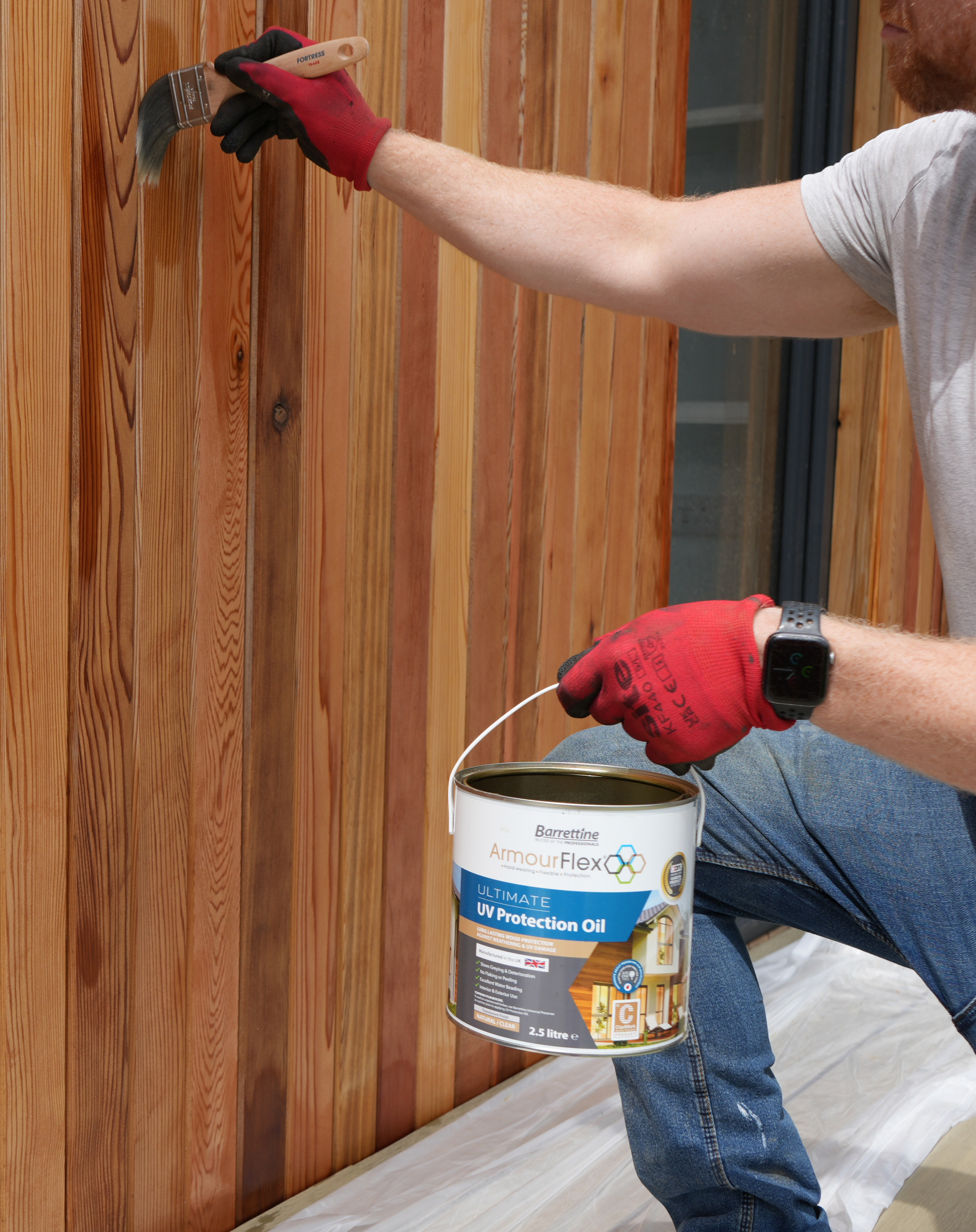
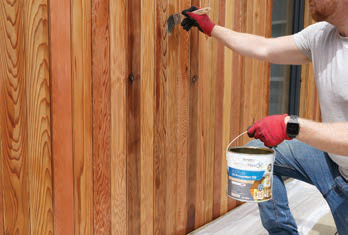
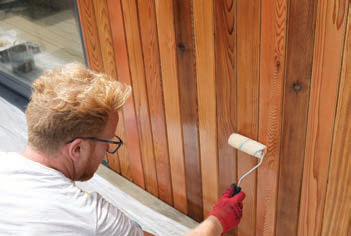
With the primer coat on, it was now time to apply the topcoat to the cedar cladding. For this, James used Barrettine’s Armourflex® Ultimate UV Protection Oil. A blend of natural oils, waxes, and resins, this incorporates the latest UV stabilising technology to protect against weathering and UV damage. It is UV damage that is so often the cause of wood swelling, twisting, and greying. James admitted himself that choosing cedar to clad his garden room was no small expense. It would then seem counterproductive to let an investment like that go to waste!
By the same notion, if you’ve got a customer who wants quality timber cladding on a project, be that a garden room or a new house facade, they won’t be too pleased if they’re left with something that’s greying in the sun after a few months.
Ideal for all exterior wood types including doors, windows, and structural timbers, the UV Protection Oil imparts excellent water repellence to both softwood and hardwood, giving a microporous finish that is resistant to flaking, peeling, cracking and blistering.
To apply, James did two coats. The first was done generously, after this it’s recommended to go sparingly to suit the aesthetic; the more generous, the more a gloss will build up.
For drying, allow a minimum of 4 hours between coats and 10 hours until fully dry. As a guide, a 1L tin will cover 8 m² with 2 coats (although this depends on the wood itself and how much it absorbs the product). From an after-care perspective, it can vary on sun position and UV levels but in a year and a half’s time or more, James can simply buy a fresh tin of UV oil and just apply it on.
The result
The final result? James is feeling rather pleased with his revamped and protected garden room and can rest easy knowing his workplace investment is well protected.
Barrettine - find out more
Barrettine